Home Care News
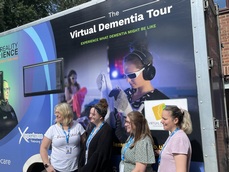
Dementia Bus gives carehome.co.uk staff insight into life with dementia
29 Jul 2024
The Dementia Bus has paid a visit to Hungerford, delivering two days of dementia awareness training to staff from the UK’s leading reviews site for care homes and home care. Employees at carehome.co.uk and.....
Will the health and social care sector be better off when the UK leaves the EU?
03 Jun 2016
Vote Leave, Campaign to leave the EU
YES
With the UK free to make its own decisions, the care sector will be boosted financially with the Government able to give tax breaks to investors and zero rate VAT.
Some in the care sector have voiced concerns over how Brexit...
Britain Stronger In Europe, Campaign to remain in the EUNO
The health and social care sector is heavily reliant on foreign workers. A fifth of the 1.5m care workers in the UK are foreign with the figure rising to a half in some cities, according to King's College London's Social Care........
Should assisted dying be legalised in the UK?
03 Sep 2015
Richy Thompson, Campaigns manager for the British Humanist Association
YES, The British Humanist Association (BHA) is a national charity working on behalf of non-religious people who seek to live ethical and fulfilling lives on the basis of reason and humanity.
BHA has long supported...
Mark Atkinson, Interim chief executive at disability charity ScopeNO, Scope, a national disability charity, is opposed to a change in the law on assisted dying. The charity has suggested that the safeguards in the Assisted Dying Bill are inadequate and the definition of who could........
Should GPs be given a financial incentive to diagnose dementia?
22 Oct 2014
Jeremy Hughes, chief executive, Alzheimer's Society
YES
NHS England has launched a new initiative where it will pay GPs £55 for each time they diagnose a person with dementia. The scheme has attracted both criticism and support.
Jeremy Hughes, chief executive at Alzheimer’s Society,...
Katherine Murphy, chief executive, Patients AssociationNO
Katherine Murphy, chief executive of the Patients Association, is dead against the scheme calling it “a step too far” that could lead to a “bounty on the head” of certain patients. She said that good GPs are diagnosing their........
Should all disabled adults be exempt from the bedroom tax?
04 Apr 2014
Heléna Herklots, chief executive of Carers UK
YES
The controversial bedroom tax, which came into effect last year, taxes people living in social housing with more bedrooms than occupants. Under the new policy, people with one ‘spare’ bedroom in their council or housing association...
Iain Duncan Smith, Work and Pensions SecretaryNO
The Government claims nearly one third of working-age social housing tenants on housing benefit are living in accommodation too big for their needs.
Iain Duncan Smith said: “There are about 400,000 working age households........
If face to face GP appointments are replaced by Skype will it further isolate people who are housebound?
03 Apr 2014
Trevor Brocklebank, chief executive of Home Instead Senior Care
YES
The Government’s plans to replace face to face GP appointments with consultations on Skype or iPads but there is the fear that it could increase the isolation and loneliness felt by those who are housebound.
Trevor Brocklebank...
Andrew Graley, healthcare director at Polycom EMEA, a provider of video conferencing equipmentNO
Mr Graley believes criticism of the reforms is down to fear of change.
He says: “People like to stick with the familiar, so it’s no surprise that for many of us, the initial reaction is to reject Jeremy Hunt’s initiative.........
Is the Government implying disabled people are cheating the benefit system?
10 Feb 2014
Philip Connelly, policy manager at Disability Rights UK
Yes
Disability campaigners have criticised the Government’s announcement that over a million disabled are actually fit to work, claiming it is causing the public to see people with disabilities as ‘workshy scroungers’.
Philip...
Mike Penning, Minister of State for Disabled PeopleNo
It is better to see if people with disabilities can work with support and give them more independence, rather than writing them off as on long-term sickness benefits, according to the Government.
The........
Should there be a minimum time of 30 minutes for home care visits?
03 Sep 2013
Trevor Brocklebank, chief executive officer, Home Instead Senior Care
YES
Home Instead Senior Care’s minimum call out time is one hour.
Chief executive, Trevor Brocklebank, would like to see the Government abolishing 15 minute visits and stipulating at least half an hour for a home care visit.
He...
Felicity Hindson, executive member for adult social care, Hampshire County CouncilNO
A survey by the United Kingdom Homecare Association found that in England, nearly three quarters (73 per cent) of homecare visits commissioned by councils are for periods of 30 minutes or less, with one in ten (10 per cent)........
Will care funding plans protect the homes and savings of adults with care needs?
07 Aug 2013
Norman Lamb, Care and Support Minister
YES
The care funding reforms announced in July by Care and Support Minister Norman Lamb are designed to give peace of mind to adults with savings less than £118,000.
Mr Lamb explains: “These reforms bring reassurance to millions...
Bernard Walker, College of Social WorkNO
Bernard Walker, chair of the College of Social Work's adult faculty expressed deep concerns that the funding may prove ineffective, saying: “We strongly question whether local authorities will be able to cope with the anticipated........
Will the changes to health and social care funding in this year’s Spending Review benefit people requiring home care?
01 Jul 2013
George Osborne, Chancellor of the Exchequer
YES
In his spending review the Chancellor of the Exchequer George Osborne announced that the Government will be investing an extra £3.8bn to integrate health and social care.
He said that the investment will improve services...
Mike Padgham, United Kingdom Home Care AssociationNO
However the United Kingdom Home Care Association (UKHCA), the professional association for home care providers has highlighted its view that the changes put for forward by the Chancellor could have a negative impact on both........
Should GPS tagging devices be used on dementia patients?
01 May 2013
Suzie Mitchell, police sergeant at Sussex Police
Yes – it stops family carers worrying and keeps patients safe
Sussex Police has joined a number of local authorities in investing in GPS tagging devices for dementia patients that can be worn around their neck, clipped to a belt...
Dot Gibson, general secretary for National Pensioners ConventionNo – using tags on dementia patients is treating like criminals
The National Pensioners Convention (NPC) has condemned the move as “just about saving money rather than treating people with dignity”.
Dot Gibson, NPC general secretary........
Will the new Personal Independence Payments (PIP) support society's most vulnerable?
08 Mar 2013
Esther McVey, Minister for Disabled People
YES
MP Esther McVey, the Minister for Disabled People, believes the Bill containing Personal Independence Payment (PIP) assessments amongst wider benefit reforms will prove important to adults with a disability....
Jane Young, from campaign group We Are SpartacusNO
Jane Young, of campaign group We Are Spartacus, judges the PIP system as unfair to the lives of disabled adults.
In her ‘Emergency Stop’ report she writes: ‘1.8 million people of working age in the UK currently........
Should regulatory bodies the CQC and Monitor be merged into one regulator?
07 Feb 2013
Robert Francis QC, chair of the Mid Staffordshire NHS Foundation Trust Inquiry
YES
Among the key recommendations from the Francis Inquiry into care failings at the Mid Staffordshire NHS Foundation Trust, published this week, is the proposal that England’s care sector regulator the Care...
Dr Jennifer Dixon, Nuffield TrustNO
Nuffield Trust chief executive Dr Jennifer Dixon welcomed to the work undertaken by the Inquiry but announced caution at the proposal of a merger between the two bodies, commenting:
“There is much to commend........
Are personal health budgets beneficial for older people?
13 Dec 2012
Vidhya Alakeson, deputy chief executive of the Resolution Foundation, which is working to improve outcomes for people on low and modest incomes
Thousands of patients in England will soon have access to their own NHS personal health budgets giving them more control over the type of treatment they receive. The scheme is designed to help patients who have complex conditions...
Mo Smith, founder and chair of trustees of Regenerate-RISE, which is working to eradicate isolation among elderly people in the UKMo Smith believes it is unfair to put the onerous responsibility of personal health budgets onto older people.
She says: “I think it is unfair to give older people the responsibility of being an employer as there is a high risk........
Home care vs Residential care home
04 Oct 2012
Lindsey Edgehill, marketing director, Helping Hands
HOME CARE “Residential care homes are a crucial part of the UK’s elderly care portfolio and without them the country would not be able to adequately care for its elderly, but it’s important that families understand that alternatives...
Geoff Lane, chief executive, Regal Care Trading LtdRESIDENTIAL CARE “It is undoubtedly true that when we reach an age where we need additional help, the vast majority of people would wish to stay in their own home in familiar surroundings. In many instances this works well but the........