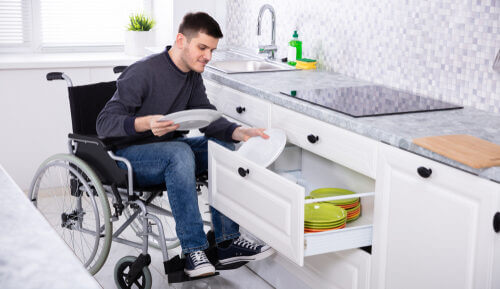
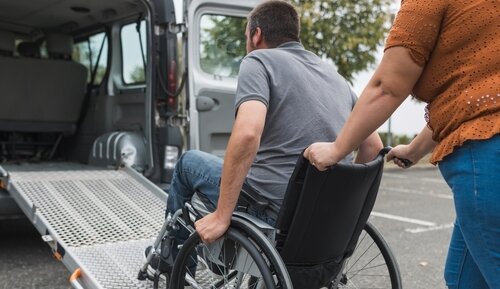
This guide explains the different types of mobility aids in the UK, including mobility aids for walking and the typical cost to help you decide what’s right for you.
Page contents
- At a glance
- What is a mobility aid?
- Types of mobility aids
- How do I choose the right mobility aid?
- What is a home assessment?
- How much do mobility aids cost in the UK?
- Mobility aids for walking
- Bedroom aids
- Bathroom Aids
- Transport outdoors away from home
- What benefits fund mobility aids?
- Where can I find care to help with mobility at home?
- Next steps
Page contents
- At a glance
- What is a mobility aid?
- Types of mobility aids
- How do I choose the right mobility aid?
- What is a home assessment?
- How much do mobility aids cost in the UK?
- Mobility aids for walking
- Bedroom aids
- Bathroom Aids
- Transport outdoors away from home
- What benefits fund mobility aids?
- Where can I find care to help with mobility at home?
- Next steps
At a glance
- If you are older, have a disability or illness, or are recovering from injury/surgery, mobility aids can help you move safely around your home and outdoors.
- Types of mobility aids available in the UK include walking aids, lifting aids, wheelchairs, and mobility scooters.
- Costs vary widely, from low-cost aids like walking sticks to higher-cost equipment such as powered wheelchairs and stairlifts.
What is a mobility aid?
Mobility aids are devices that help you move around easily, change position, or transfer safely. They are designed to reduce the risk of falls and support your daily activities.
You can use them short-term for recovery or long-term for ongoing conditions.
Mobility aids range from simple walking supports to advanced powered equipment and home adaptations that require changes to your home to make daily tasks easier and safer.
Types of mobility aids
Types of mobility aids include:
- Activator poles.
- Walking stick.
- Walking frame
- Walking rollator.
- Quad cane.
- Crutches.
- Grab rail.
- Lifting pole.
- Lifting cushion.
- Automatic leg lifter.
- Rise-and-recline chair.
- Stairlift.
- Raised toilet seat.
- Commode.
- Bed rail.
- Bed rope ladder.
- Bed hoist.
- Walk-in shower.
- Outdoor ramp.
- Wheelchair.
- Mobility scooter.
How do I choose the right mobility aid?
The right mobility aid will depend on your mobility, strength, balance, home environment and what you want help with. It is also worth considering where you will use the aid, how often you will use it and whether your needs are likely to change.
You can ask your local council (or Northern Ireland Trust) for a care needs assessment, which will determine what care and support needs you require.
You can also ask your local authority for a home assessment to help ensure the mobility aid equipment you get suits your needs.
What is a home assessment?
Before most home adaptations can be installed, you will need a home assessment.
These are carried out for free by your local council (or trust if you’re in Northern Ireland). It identifies what type of adaptations you need and any financial support you are eligible for.
To receive a home assessment, contact your local council or trust.
How much do mobility aids cost in the UK?
The cost of mobility aids depends on:
- Type of equipment.
- Whether it is manual or powered.
- Short-term or long-term use.
- NHS or private purchase.
Some mobility aids may be free or subsidised following an NHS or local authority care needs assessment, while others are paid for privately.
Mobility aids for walking
Walking aids are among the most commonly used mobility supports.
Many walking aids are available through the NHS following an assessment or can be purchased privately.
What is an activator pole?

- They can provide extra stability and support while walking, particularly outdoors. Activator poles may be useful for people who need additional support with balance, leg strength or walking.
- They provide extra stability and support while walking, especially outdoors.
- It is designed to help people with balance problems, reduced leg strength, joint pain or arthritis, neurological conditions or recovery after injury or surgery.
- Designed with ergonomic grips for comfort, activator poles are intended to improve posture and walking rhythm.
- Many people use these poles for both rehabilitation and fitness. This walking aid helps reduce stress on lower-body joints like the knee and supports a healthy gait.
- When using activator poles, it’s important to use the right posture and pole height. If you’re not sure about the right way to use the poles, you can ask a physician.
How much do activator poles cost?
Prices can vary depending on brand, build quality, and features, e.g., collapsibility, grips, and weight capacity.
- Basic activator poles cost £10-30.
- Some activator walking/rehab poles could cost £120-210+, depending on the model and features (ergonomic grips, anti-vibration, patented mechanisms, etc).
What is a walking stick?

- A walking stick or cane is one of many mobility aids that can provide additional support and help you feel more confident when walking.
- While this walking aid doesn’t have much technology, it’s strongly recommended to get the right size walking stick or cane.
- Using a walking stick at the wrong height can put additional strain on areas such as the shoulders.
.
How much does a walking stick cost?
Walking sticks can typically cost £10-30.
What is a quad cane?

- A quad cane is a type of walking stick designed to offer extra stability and balance compared with a standard, single-point cane.
- Instead of one foot at the base, it has four points of contact with the ground, usually arranged in a small square.
- They stand on their own and are more stable than a regular cane. This is ideal if you have balance issues or weakness on one side, and they are adjustable for height.
How much does a quad cane cost?
Quad canes can cost £14-40.
What are crutches?

- Crutches are walking aids designed to help people walk when they have difficulty putting weight on their legs because of injury, surgery, disability, or medical conditions.
- They work by transferring weight from your legs to your arms and upper body, giving support and balance so you can move more safely and comfortably.
Types of crutches
- Underarm (Axillary) Crutches: Fit under the armpits and have hand grips. Often used after leg injuries or surgery.
- Forearm (Elbow) Crutches: Have cuffs around the forearms and a hand grip. They give more control and are often used for longer-term mobility support.
- Specialised crutches/ Other Styles: Includes ergonomic versions, bariatric (for heavier users), folding crutches, or those designed for children.
How much do crutches cost?
- Crutches help you stay mobile during recovery and can even be provided by the NHS in some cases, particularly right after treatment or surgery. Ask your healthcare provider before buying.
- Prices (often shown per pair) vary based on type, material, and quality, with basic models typically costing £8-30, standard adjustable crutches costing £20-40, and folding or carbon-fibre models costing £80+.
- Accessories like padded grips, ferrules (rubber tips), or small bags can improve comfort but add extra cost.
- Many stores also offer VAT relief for people with long-term illnesses or disabilities, which can further reduce the cost.
- You could rent crutches (from pharmacies or mobility stores), which may cost around £5-£15 per week. This is useful for short-term recovery.
What are walking frames?
- A walking frame can provide extra support and stability for people who have difficulty balancing or walking independently.
- Walking frames can be standard, wheeled, or foldable and can be used indoors or outdoors.
How much does a walking frame cost?

- Walking frames are usually lightweight aluminium and give basic support and balance around the home and can cost £30-75.
- Many walking frames are eligible for VAT relief (zero VAT if for personal use due to a disability).
- You can find second-hand frames for £10-25.
What are rollators?

- A rollator is a type of mobility aid designed to help people who have difficulty walking, balancing, or moving independently.
- Unlike a basic walking frame, a rollator has wheels on each leg (usually three or four), brakes, and often extras like a built-in seat, storage bag or basket, and adjustable handles.
- Many models are lightweight and foldable, making them easier to transport and store.
- The seat lets you rest when you’re out and about.
- Rollators can be used indoors and outdoors depending on the wheels and design.
Types of rollators
Before buying, consider the type of rollator you need:
- Wheel size: Larger wheels handle rough outdoor surfaces better.
- Seat and backrest: Useful if you need to rest during walks.
- Adjustable handles: Important for comfort and correct posture.
- Foldability: Better if you’ll transport it often.
How much does a rollator cost?
- A basic rollator costs around £50-100 for lightweight walkers with basic support.
- Mid-range rollators with adjustable handles, a seat, brakes and a bag cost £100-300.
- Specialised high-end models (all-terrain rollators, advanced frames, conversion features) can cost £300+.
What are wheelchairs?

Wheelchairs support individuals who have limited or no ability to walk.
- A wheelchair is a chair mounted on wheels that allows a person to travel independently or with assistance.
- It supports individuals with injury, disability, or long-term mobility conditions, recovery after surgery, weakness, pain, or balance problems.
Types of wheelchairs
- Manual wheelchairs (standard, lightweight and heavy duty). Moved by the user pushing the wheels or by someone assisting.
- Paediatric wheelchairs (standard, lightweight and heavy duty).
- Powered (electric) wheelchairs. Operated using a joystick or controls, useful for people with limited strength.
- Indoor-only powered wheelchairs.
- Indoor/outdoor powered wheelchairs.
- Specialist seating wheelchairs.
How much does a wheelchair cost?
- A standard, self-propelled wheelchair typically costs £100-300.
- Wheelchairs with more features, including electric wheelchairs, can cost £4000 (depending on specifications), but typically cost £2500.
- The NHS may provide some wheelchairs. To be eligible for a free wheelchair on the NHS, you should need it at least three days a week. You must have a mobility problem as a result of a permanent disability or a medical condition which lasts for over six months, or you must require palliative care. Waiting times and eligibility vary.
- You can read this article about hiring or funding the purchase of a wheelchair.
Bedroom aids
What is a bed rail?

- A bed rail (also called a bed safety rail or bed assist rail) is also a mobility aid.
- It is designed to help people get in and out of bed safely, change position and reduce the risk of falling out of bed.
How much does a bed rail cost?
- Basic bed rails can cost £15-50.
- Mid-range bed rails cost £60-120.
- Larger, heavy duty, hospital-style rails and models with pivoting handles can cost £150-300+.
What is a lifting pole?

- A lifting pole can help someone with reduced upper-body or core mobility move into a sitting position in bed. It lets the person use their arms for extra support when repositioning.
- With a lifting pole, you can use your arm muscles to help you get to a sitting position or stand and get out of bed.
How much does a lifting pole cost?
Lifting poles range from £90 to £250.
What is a bed rope ladder?

- A bed rope ladder can provide support when moving from lying to sitting. Whether it is suitable depends on the person’s strength, mobility, and the type of bed, so professional advice may help if you’re unsure.
- A bed rope ladder is an alternative to a lifting pole and may suit someone who finds a lifting pole difficult to reach or use.
- Weight limits vary by product, so check the manufacturer’s guidance to make sure the aid suits the person using it.
How much does a bed rope ladder cost?
Bed rope ladders cost, on average, £10-25.
What is a bed hoist?

- A bed hoist is equipment used to lift and transfer a person safely.
- For example, it could move a person from a bed to a wheelchair, from a bed to a chair, or from a bed to a commode or toilet.
- The bed hoist uses a sling and mechanical lifting system (manual or electric) to support the person’s weight.
How much does a bed hoist cost?
- Buying a bed hoist can cost £ 700- £ 3,000+.
- If you only need a hoist temporarily (e.g., after surgery), hiring a bed hoist can be much cheaper.
- Hoist hire: £261.60 (approx) for a basic 180 kg model short-term.
- Hiring can work out to £100-150+ per week for electric hoists but avoids a large one-off purchase.
What is a lifting cushion?
- Lifting cushions, also called seat assist or lift-assist cushions, help people stand up from a seated position more easily and are useful for armchairs, sofas or dining chairs.
- With a lifting cushion, standing up is easier on your knees and lower-body muscles.
- The device helps you stand up from a seated position.
- Many lifting cushions qualify for VAT exemption if purchased due to a disability or long-term mobility need.
How much does a lifting cushion cost?
Lifting cushions can cost: £130-220.
What is a rise-and-recline chair?
- Rise-and-recline chairs are motorised chairs designed to help you stand up and sit down with ease.
- They also allow you to recline for comfort.
- Prices vary depending on the chair’s features (single vs dual motor, materials, size, extra functions).
How much does a rise and recline chair cost?
A rise and recline chair typically costs £295- £ 2,000.
What is an automatic leg lifter?
- An automatic leg lifter can help someone with reduced lower-body mobility move their legs onto or off the bed. This can make getting into and out of bed easier while allowing them to continue using their existing bed where suitable.
How much does an automatic leg lifter cost?
- The price of an automatic leg lifter can vary depending on weight capacity, portability, adjustable angles, etc.
- Basic manual leg lifter straps and handle loop aids range from £6-30.
- Fully powered, electric leg lifters can cost £900-2700.
What is a stairlift?

A stairlift can make moving between floors easier and safer if you find using the stairs difficult. It may help you continue using more of your home without needing major structural changes. Straight, curved and outdoor stairlifts are available, depending on your staircase and mobility needs.
How much does a stairlift cost?
Some providers include installation costs in the price. Others charge £300-1,500 extra for installation. Annual servicing and battery replacement are extra ongoing costs.
- Straight stairlifts can cost: £3000-3,500 including installation.
- Curved stairlifts can cost: £4,500+
- Outdoor stairlifts can cost: £2,500-6,500.
- Reconditioned stairlifts, which have been used before or refurbished, can cost £1,200-2,500.
For more advice about stairlifts, read Stairlifts 2026 | Cost, grants and how to install.
Bathroom Aids
Mobility support helps you stay safe at home, including with bathroom aids.
What is a grab rail?

- Grab rails can provide extra support in areas where slipping or falling is more likely, such as bathrooms, steps, and entrances.
- Grab rail handles are permanently fixed to the wall. If you prefer non-permanent options, grab rails come with powerful suction cups.
- Before installing grab bars, talk to a professional who can advise on the best type of grab rails, materials, and installation height for your area.
How much does a grab rail cost?
- A basic plastic or simple rail costs £5-£10.
- A standard metal or stainless rail costs £15-40.
- A premium design or designer brand costs £40+.
VAT relief is often available on grab rails purchased for long-term health or mobility needs.
What is a bath lift?

A bath lift is a mobility aid designed to help someone get into and out of a bath safely without stepping over a high edge or climbing up and down.
- You sit on the bath lift seat while it’s at the top of the bath.
- Using a hand control, the lift gently lowers you down into the water.
- After you bathe, the lift brings you back up safely so you can get out.
- Many models are battery-powered and portable, so they don’t require permanent changes to your bathroom.
How much does a bath lift cost?
- A basic portable bath lift can cost: £180-£300.
- Mid-range bath lifts cost: £300-450.
- High spec bath lifts cost: £450+.
What is a walk-in shower?

- A walk-in shower is a shower that you can step straight into (or roll into), without climbing over a high bath edge.
- It’s designed to be safer, easier, and more comfortable, especially for older adults or anyone with mobility issues.
- Unlike a traditional bath or shower-over-bath, a walk-in shower has:
- A low step or no step at all.
- Usually includes a wide opening (often no door, or a simple hinged screen).
- Can include safety features like grab rails, a seat, and non-slip flooring.
- Water drains away through a low-profile tray or floor drain.
How much does a walk-in shower cost?
A typical mid-range walk-in shower including installation cost is £3000-6,000.
| Component | Approx Cost |
| Walk-in tray & screen | £300-1,200 |
| Shower fittings | £150-800 |
| Waterproofing & tiling | £800-£2,000 |
| Labour (tiling/plumbing) | £1,000- £2,500 |
| Total | £3,000- £6,000+ |
What is a shower chair?

- A shower chair is a waterproof seat designed to be used inside a shower or wet room, allowing you to sit down while bathing rather than stand.
- Shower chairs can range from simple stools to height-adjustable chairs with backs and arms, and even wheeled models for easier movement or use with carers.
How much is a shower chair?
- Basic shower chairs can cost £15-60.
- Mid-range shower chairs (with more features like backrests, arms, height adjustment or mobility) cost: £60-140.
- High spec shower chairs can cost £150+.
What is a raised toilet seat?

A raised toilet seat (typically 4-10cm higher) is used to make toilets easier to use for people with limited mobility, pain when bending, or recovery from surgery.
How much does a raised toilet seat cost?
- Prices can vary quite a bit depending on features (like handles, padding or a frame).
- A basic raised toilet seat typically costs £10-20.
- A mid-range raised toilet seat costs £20-40.
- Supported raised toilet seats cost £30-50.
What is a commode?
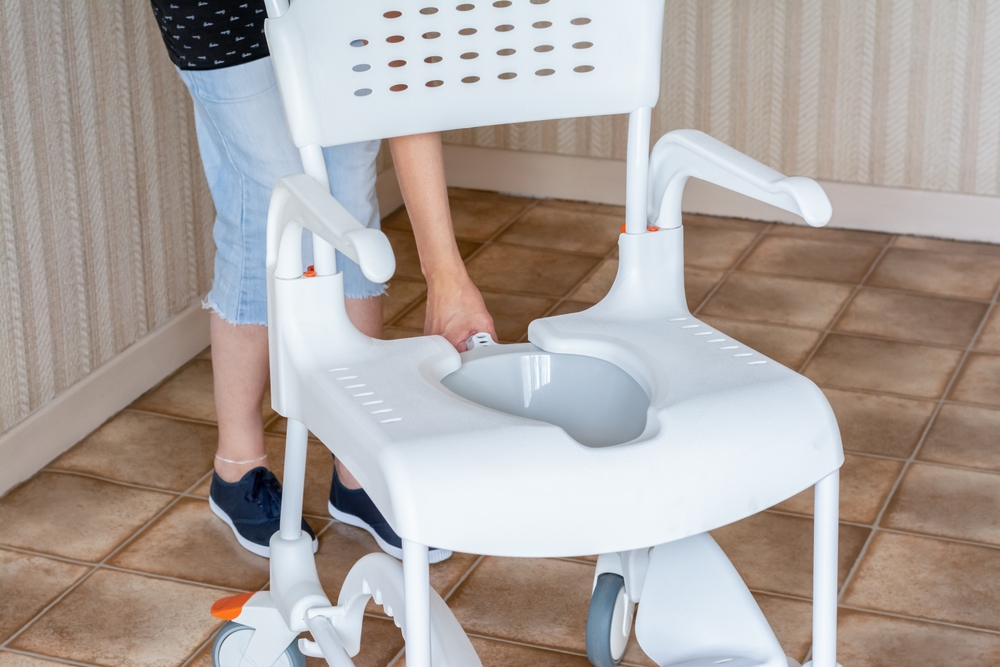
- A commode is a toileting aid or portable toilet seat designed to help people who have difficulty getting to or using a standard bathroom toilet.
- This mobility aid is a chair with a built-in toilet pan or bucket that can be used beside a bed, in a bathroom or elsewhere in the home.
- Some have wheels so a caregiver can move them easily; others are simple stationary chairs.
- They often have adjustable heights, armrests, and padded seats for comfort and safety.
How much is a commode?
- Basic options: £40-99.
- Mobile wheeled commode chair: £100+
- High-End: £250+
Commode prices often include VAT relief for people with long-term disabilities, which can lower the cost further based on eligibility.
Commode chairs vary widely in cost depending on features like wheels, padding, design and build quality.
Some commodes can also be hired or rented short-term if you need them only temporarily.
Transport outdoors away from home
What is an outdoor ramp?

- An outdoor ramp (often called a wheelchair or access ramp) is a sloped surface installed outside a building to help people with mobility challenges move safely between different levels. For example, from a path up to a doorstep or patio.
How much does an outdoor ramp cost?
An outdoor ramp can cost from £15 (for small basic models) to £500 (for larger models with handrails).
What is a mobility scooter?

- A mobility scooter is a single-seat vehicle with a foot platform and storage space.
- It runs on a battery and can transport you indoors or outdoors if you have trouble walking.
- It has handlebars or a tiller, which makes the vehicle look similar to a motorbike or bicycle. It is also described as a disability scooter or disabled scooter.
- Mobility scooters can help people who have difficulty walking longer distances get around more independently outdoors.
Types of mobility scooters
Mobility scooters have either three or four wheels; some are foldable and designed for pavement or road use.
- Three-wheel scooters: Easy to manoeuvre, lighter and better at negotiating tight turns and going through narrow spaces than four-wheel scooters.
- Four-wheel scooters: They can handle roads, steep hills and rough terrain.
- Portable scooters and foldable scooters: They have a light frame and typically come apart into smaller parts (portable) or fold down into smaller parts to fit into a car. Not for road use, these scooters can be transported in cars.
- Pavement scooters: Maximum speed is 4mph. Can travel up to 20 miles on a single charge.
- Road-legal mobility scooters: These scooters are more comfortable on bumpy surfaces. Maximum speed: 8mph on the road and 4mph on the pavement. Includes lights, indicators and a horn.
Scooter class types
- Class 2 scooters – Max speed 4mph. Can be driven on pavements and cycle tracks.
- Class 3 scooters -Max speed 8 mph. Can be driven on roads and pavements, but not cycle lanes. Have lights and a flashing yellow beacon for use on dual carriageway roads.
- Not in-class scooters – Faster than 8mph. Can only be driven on the road.
How much does a mobility scooter cost?
- £700-£1,500 for basic scooter models.
- £2,000-£5,000+ for advanced scooters.
Insurance is recommended for larger scooters. You can read about getting a free or secondhand mobility scooter here.
How much do home adaptations cost?
- Basic mobility aids/adaptations may typically cost £20-£100.
- Minor home adaptations typically cost less than £1000 and include changes that do not require much work to a property.
- Major adaptations can cost up to £10,000 and include anything that requires structural changes (like widening corridors) or an extension to a property.
- You can read more about home care adaptations and help you can get to pay for them here.
Do I need a prescription to buy a mobility aid?
No. You can buy many mobility aids privately without a prescription.
What benefits fund mobility aids?
Disabled Facilities Grant (DFG)
Local authorities may offer grants for mobility aid equipment, such as a Disabled Facilities Grant (DFG). The DFG is financial assistance available in England, Wales, and Northern Ireland to help people with disabilities or limited mobility make their homes more accessible.
How much is the Disabled Facilities Grant?
- England: up to £30,000.
- Wales: up to £36,000.
- Northern Ireland: up to £25,000.
Scheme of Assistance – Scotland
Scotland does not offer the Disabled Facilities Grant (DFG). Instead, local authorities provide support through the Scheme of Assistance, which helps residents adapt their homes to meet the needs of disabled occupants.
How much is the Scheme of Assistance in Scotland?
- Grants cover at least 80% of the eligible costs.
- You may receive 100% funding if you receive one of the following benefits.
Independence at Home Grants
Independence at Home is a UK charity that provides grants to people with a physical or learning disability or long-term illness who are in financial need. They can help fund mobility aids.
Royal Agricultural Benevolent Institution (RABI) Independent Living grants
Royal Agricultural Benevolent Institution (RABI) grants are available to farming families. These can be used to help people to make their house or flat more accessible.
Soldiers’, Sailors’, and Airmen’s Families Association (SSAFA) Help With Mobility
The SSAFA offers mobility support to those who have received at least one day’s pay from the British Army, Royal Air Force, Royal Navy, or Royal Marines, including the Reserves.
Can carers help with mobility aids?
Yes. Home carers can assist with safe use of mobility aids, transfers, and daily mobility support.
Where can I find care to help with mobility at home?
- Living Made Easy is provided by the DLF charity (previously known as the Disabled Living Foundation). They give free advice on solutions, gadgets, adaptations and aids to make life easier.
- Home Improvement Agencies (HIAs) help older, disabled, or vulnerable people continue living at home safely and independently by offering advice and support to make modifications to their homes. In Scotland, HIAs are also known as Care & Repair services. They offer help with disabled adaptations, home repairs/handyperson services, hospital discharge, and re-ablement.
- Mobility aids are often most effective when combined with the right care. homecare.co.uk lets you search for regulated home care services that offer mobility and daily living support to help you or your family remain independent at home.
Next steps
- Request a free home and care needs assessment: Contact your local council’s social services department or the Health and Social Care Trust in Northern Ireland. They will evaluate your mobility needs and determine which aids or home adaptations can be provided free.
- Explore state grant opportunities: If you need larger home modifications, such as stairlifts or walk-in showers, apply for financial assistance through a Disabled Facilities Grant (DFG), which provides up to £30,000 in England, £36,000 in Wales, and £25,000 in Northern Ireland, or the Scheme of Assistance in Scotland.
- Claim VAT relief on private purchases: If you need to buy equipment before an assessment or to supplement provided items, complete a VAT exemption declaration at the point of sale to avoid paying 20% VAT on disability-related mobility products.

Find home care near you
Search for home care near you, compare costs, and read reviews from families to help you choose.

FAQs
Can carers help with mobility aids?
Yes. Home carers can assist with safe use of mobility aids, transfers, and daily mobility support.
Do I need a prescription to buy a mobility aid?
No. Many mobility aids can be purchased privately without a prescription.
Can mobility aids be provided by the NHS?
Yes, some aids such as walking frames and wheelchairs may be provided following an assessment, though availability varies.
Expert advice straight to your inbox

Related Articles