If you are nearing end of life or you are diagnosed with a life-limiting illness, you may think that you have to move away from home.
This is not necessarily the case.
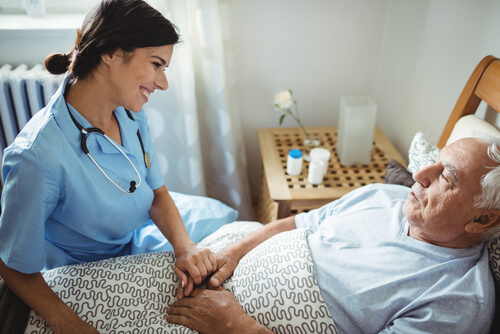
Both palliative care and end of life care can be provided to people at home.
Page contents
- At a glance
- Can you get palliative care at home?
- What is palliative care?
- What palliative care can you receive at home?
- Palliative care options
- End of life care services at home
- What end of life care services can you receive at home?
- Caring for a dying family member at home
- Remember to look after yourself
- Next steps
- FAQs
Page contents
- At a glance
- Can you get palliative care at home?
- What is palliative care?
- What palliative care can you receive at home?
- Palliative care options
- End of life care services at home
- What end of life care services can you receive at home?
- Caring for a dying family member at home
- Remember to look after yourself
- Next steps
- FAQs
At a glance
- Care location choice: People nearing the end of life have the right to receive high-quality palliative or end-of-life care at home, with loved ones, in familiar surroundings.
- Fully-funded support: NHS Continuing Healthcare can pay for home care. This support is not means-tested and is based only on clinical need. It covers physical, emotional, and nursing care.
- Integrated medical team: Your GP leads your care at home, with help from district nurses, social care workers, and specialists like clinical nurse specialists and occupational therapists.
- Flexible delivery models: Support can be tailored to your needs, from short daily visits or hospice day visits to full-time, 24-hour live-in care.
Can you get palliative care at home?
Everyone nearing the end of life deserves high-quality care, whether they choose to be at home, in a care home, hospice, or hospital.
You have the right to choose where you receive care and where you spend your final moments.
End-of-life and palliative care are shaped around each person’s wishes. The goal is to help people live as well as possible until the end and to pass away with dignity.
If you want to receive care at home, you can ask to be assessed for NHS continuing healthcare. Some people with specific health needs can get free care funded by the NHS.
Talk to your GP, local authority, or social care worker. They can help you arrange an assessment.
What is palliative care?
When someone is diagnosed with a serious or terminal illness, palliative care helps manage both physical and emotional symptoms for the person and their loved ones.
Palliative care looks at the whole person. It aims to make life as good as possible for the person who is ill, as well as their family and friends.
When you begin palliative care, a team including your GP, community nurses, social care workers, and specialists will visit you regularly.
What palliative care can you receive at home?
The services you need will depend on your illness or condition.
Some symptoms can be managed well at home, but others may be harder to handle there.
We recommend talking to your GP. They can give you information, explain what to expect, and help you make plans.
You can receive many types of palliative care services at home, such as:
- Personal care, such as help with dressing, bathing and toileting
- Continence care
- Help with medication
- Pain management for both physical and emotional pain
- Help with moving around, including changes to your home to make it easier to get about.
- Housekeeping
- Meal preparation
- Food shopping and prescription collection
- Companionship to help you stay independent
- Psychological support for the patient and the family
Specialist palliative care services
Some social care workers and nurses are experts in palliative care. They often help people with complex conditions, such as cancer.
For example, a palliative care clinical nurse specialist is a registered nurse with special training and qualifications in cancer and palliative care.
They help cancer patients and their families by managing pain, offering psychological support, giving information about the illness, and helping plan for the future.
Other specialists who might visit include occupational therapists, physiotherapists, and counsellors.
Palliative care options
The way you receive care also depends on your condition and how much support you need.
Hospice care
You can get support from a hospice even if you want to stay in your own home.
You can receive hospice care from the day your illness is diagnosed as terminal until the end of life. Depending on your condition, this care can last for years.
Hospice care can let you live at home while visiting the hospice a few days a week. This gives you access to more services and a chance to meet others receiving care.
A hospice team includes doctors, nurses, social workers, therapists, counsellors, and volunteers. They offer services like rehabilitation, physiotherapy, bereavement care, and spiritual and psychological support.
Home visits
If you would rather have people visit your home for shorter periods, regular home visits might be the best choice.
This lets you decide when a carer visits, and can include overnight stays. Home visits can be as short as 30 minutes or happen several times a day.
Live-in care
You can have a specially trained carer live with you to provide support around the clock, whether you need help with cooking, personal care, or more complex needs.
Live-in carers can be matched to your care needs and personal preferences, providing consistent support from someone who gets to know you and your routines.
End of life care at home
End-of-life care includes palliative care and aims to make sure a person dies as comfortably and with as much dignity as possible, wherever they choose, and with loved ones nearby.
You can plan your end-of-life care so that future care includes only the treatments you want.
This also helps your family and friends understand your wishes and make decisions about your care if you can’t.
You can receive end-of-life care at home if you want it.
High-quality end-of-life care aims to help a person remain as comfortable as possible and be treated with dignity, compassion and respect.
Ensuring a ‘good death’ at home
The idea of a ‘good death’ focuses on helping someone feel as comfortable as possible and treating them with dignity, compassion and respect at the end of their life.
This means keeping the person clean and comfortable in familiar surroundings, with important people nearby.
Many people nearing the end of life prefer to spend their final days at home. This lets them sleep in their own bed and be surrounded by their own things.
It also means they can see family, friends, neighbours, and beloved pets. Being at home offers privacy and peace of mind.
End of life care services at home
The services offered in palliative care are much the same as those for end-of-life care. These can include home visits from social care workers and specialists.
Hospices can also provide end-of-life care and offer bereavement support to family and friends who were close to the person.
Talking to your healthcare team about your wishes can help them understand the care that matters to you.
Like with palliative care, some symptoms may be harder to manage at home than in a hospice or hospital.
Talk to your GP about the best options for you.
What end of life care services can you receive at home?
The GP looks after the person’s medical care, prescribes medicines, and arranges for other healthcare professionals and specialists to visit.
District nurses work with the GP to care for the patient’s nursing needs.
Nurses can help with personal care, incontinence care, and advise on issues like preventing pressure sores.
They can also give emotional support to the patient and their family.
Depending on the patient’s condition, a clinical nurse specialist may be needed to provide expert palliative care and help manage pain and other symptoms.
Caring for a dying family member at home
Many family members become carers when a loved one is nearing the end of life.
It is understandable to have questions or feel unsure about how best to support someone at this time.
If you are caring for a family member, their GP, nurses or social care worker can offer advice and support.
You might help with tasks like washing, dressing, managing medication, and using the toilet.
Remember to look after yourself
Caring for a family member in their final months or days can be very hard, especially if their condition gets worse over time.
As someone’s needs increase, caring for them can become more physically and emotionally demanding. You may also worry about whether you are doing enough or providing the right support.
If some aspects of care become difficult to manage, speak to the healthcare professionals supporting you. They can advise you and may be able to arrange additional help.
Next steps
- Request NHS Continuing Healthcare Fast-Track assessment: Ask your GP, district nurse, or specialist clinician to help you complete the NHS Continuing Healthcare Fast-Track Pathway Tool. This process skips usual waiting times and can provide fully funded end-of-life care at home within 48 hours.
- Document and share your care preferences: Talk with your family and healthcare team about your wishes for treatments, personal care, and where you want to live. Together you can create an advance care plan to guide future medical decisions.
- Organise local home and hospice support: Work with your GP or a local social care worker to set up services such as district nurse visits, respite care, or access to a day hospice.
FAQs
Can palliative care and end of life care be provided at home?
Both palliative care and end of life care can be provided to you in the comfort of your own home, but the same services may not be available compared to if you were in a hospital or hospice. However, anyone approaching end of life is entitled to high-quality care wherever they choose to receive it. It can also be comforting to be in a familiar place, surrounded by loved ones.
What palliative care services can you receive at home?
Palliative care services are provided according to your needs and wishes, but can include personal care (help with dressing and bathing, etc), continence care, help with medication, psychological support, companionship and more. Complex care can also be provided by for example a palliative care clinical nurse specialist. This could happen in the form of home visits or live-in care.
How does end of life care at home work?
The main goal of end of life care is to ensure a person dies as comfortable as possible with dignity and in accordance with their wishes. In addition to receiving basic care, the dying person’s GP is in charge of the medical care provided and arranging for other healthcare professionals to visit. End of life care includes palliative care to manage the person’s condition, both physically and emotionally.
How do you care for someone dying at home?
Many family members become carers if their loved one is nearing end of life. It can be difficult to cope with the tasks involved, such as washing and dressing, managing medication and help to using the toilet. It is a good idea to speak to your loved one’s GP, nurses or social care workers for advice, particularly if you are worried about doing things right or the physical and emotional demands become too much.
Can you live at home and receive hospice care?
You can access hospice care from the day you have been diagnosed with a terminal illness and until end of life. Hospice care can enable you to live at home but make visits to the hospice for a couple of days a week to access more services than you would at home, such as physiotherapy or spiritual help. A hospice has a wide range of health professionals to support you, including therapists, counsellors, doctors and nurses.
Related Articles