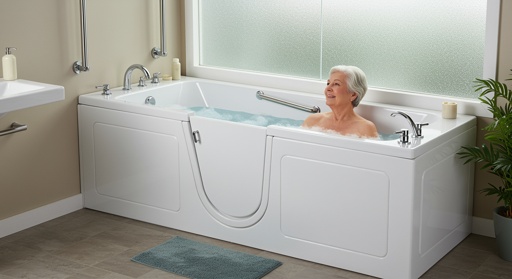
If changes in mobility are making it harder to get in and out of the bath, a walk-in bath can offer a safer and more comfortable way to bathe while helping you maintain your independence at home. Choosing the right one will depend on your mobility, the level of support you need and the space available in your bathroom.
In this guide, we look at how much walk-in baths cost, what to expect from installation and the key things to consider when choosing a bath that suits your needs now and in the future.
Page contents
- At a glance
- How much does a walk-in bath cost?
- What affects the price?
- Choosing the right walk-in bath
- Walk-in bath vs walk-in shower
- Types of walk-in baths
- Can I get a grant for a walk-in bath?
- Can I get VAT relief on walk-in baths?
- Are walk-in baths worth it?
- Questions to ask before accepting a walk-in bath quote
- Next steps
- FAQs
Page contents
- At a glance
- How much does a walk-in bath cost?
- What affects the price?
- Choosing the right walk-in bath
- Walk-in bath vs walk-in shower
- Types of walk-in baths
- Can I get a grant for a walk-in bath?
- Can I get VAT relief on walk-in baths?
- Are walk-in baths worth it?
- Questions to ask before accepting a walk-in bath quote
- Next steps
- FAQs
At a glance
Typical installed cost range: A straightforward walk-in bath project usually costs £2,500–£5,000, although complex professional installations can reach £7,500–£12,000+.
Features increase the price: Larger baths, powered seats, hydrotherapy jets, quick-drain systems, heated seats and electrical work can all raise the final cost.
Choose for your needs: Measure the bathroom, consider current and future mobility needs, and compare two or three like-for-like quotes covering installation, plumbing, electrics and disposal.
Financial help may apply: Eligible disabled users may qualify for a Disabled Facilities Grant and 0% VAT, while people over 60 who meet the relevant conditions may qualify for a reduced 5% VAT rate.
How much does a walk-in bath cost?
Prices depend on the model, features and installation work involved. Supply-only tubs start from about £1,200. Add professional installation, removing the old bath, connecting plumbing and fitting the new one – and a straightforward project usually totals £2,500–£5,000. Many professional installers often charge £7,500–£12,000+ for complex fitting work, so it’s worth comparing quotes from independent fitters too.
| Basic models | £1,200–£2,500 | Entry-level, often compact, with essential safety features. Usually supply-only. |
| Mid-range baths | £2,500–£4,000 | More size and options, sometimes a powered seat. Often supplied-and-fitted. |
| Premium models | £4,000–£6,000+ | Full-length baths with powered seats, whirlpool or air-spa jets and heated seats; longer lead times. |
These prices exclude VAT for eligible disabled buyers (see below), and cover supply-only unless stated. Installation is extra: a fitter typically charges £250–£350 a day, and most jobs take one to two days; it could take more time if pipework, tiling or walls need altering. A “bath only” quote won’t include this, so always check exactly what’s covered before comparing prices.
What affects the price?
There are several features and installation factors that affect the final walk-in bath installation cost:
- Size and door style: Full-length baths (about 170cm) are more expensive than compact or deep-soak baths. Inward-opening doors save space but require clearance inside.
- Powered seats: Gently lift and lower the bather, but add high cost and require extra wiring.
- Hydrotherapy and air-spa jets: Whirlpool or air-spa systems can add £200–£500+ per pump for parts and labour.
- Fast-fill and quick-drain systems: Fasten up bathing but cost more than conventional taps and wastes.
- Slip-resistant flooring and grab rails: Important safety features that add modestly to the price.
- Heated seats and digital controls: Comfort extras that come at a premium but aren’t essential.
- Electrical work: Powered features require a qualified electrician, and sometimes a fuse box upgrade, usually £100–£300.
- Manufacturer warranties: Bath shells usually carry 5- to 10-year warranties; check what’s included before you buy it.
Choosing the right walk-in bath
Start by measuring your bathroom and thinking about mobility needs. The best walk-in bath for you depends on this: a full-length model suits taller or more active users, while a compact or deep-soak bath suits tighter spaces or those who prefer a seated bath. An occupational therapist can assess what’s appropriate, which is also usually required for a grant. Before committing, get at least two to three quotes for the same specification, so you’re comparing like for like, and check what each price includes – delivery, plumbing, tiling, electrics and disposal of the old bath.
Walk-in bath vs walk-in shower
A walk-in shower is usually cheaper, needs less plumbing work, and suits wheelchair users well – but it removes the option of a soak. If bathing helps with pain relief or comfort, a walk-in bath may be worth the extra cost. Some households fit both. It’s worth thinking ahead: if standing in a shower becomes difficult later, would you rather already have a bath you can use safely?
Types of walk-in baths
Walk-in baths come in several styles to suit different needs:
- Standard full-length bath: A familiar bath shape with a side door; suits taller or more active users.
- Deep-soak bath: Smaller, but deeper, with a vertical seating position; ideal for smaller bathrooms.
- Combination shower bath: A wider shower area, useful if you want to be able to both bathe and shower.
- Wheelchair accessible bath: Roll-in or assisted transfer with extra grab bars and transfer supports.
- Bariatric bath: Wider and stronger, for higher weight limits; requires more bathroom space.
Can I get a grant for a walk-in bath?
Possibly. Means-tested Disabled Facilities Grants are available in England, Wales and Northern Ireland, up to £30,000, £36,000 and £25,000. You’ll need an OT assessment and council approval before work begins.
If a disability makes a standard bath difficult or unsafe, a Disabled Facilities Grant can cover some or all of the cost.
Local councils in England, Wales and Northern Ireland offer means-tested grants of up to £30,000, £36,000 and £25,000 respectively for necessary home adaptations; Scotland funds adaptations through separate schemes.
An occupational therapist will usually assess your needs first, and you must get approval before work starts, but starting early can mean losing your grant.
Contact your local council’s home adaptations team to check eligibility.
Can I get VAT relief on walk-in baths?
People who are chronically sick or disabled can have a walk-in bath supplied and installed with 0% VAT, saving 20%. You simply sign a self-declaration confirming eligibility; no formal registration is required. If you’re not disabled but are over 60, a reduced 5% VAT rate applies to mobility aids, including walk-in baths with a sealed door. This is different from a general senior discount, so check that your supplier is applying the correct rate and handling the paperwork for you.
Are walk-in baths worth it?
For many people, yes. They help prevent falls and independent bathing, and a warm soak can relieve pain or stiffness. There is a major initial cost, but grants and VAT relief can offset this.
Every bathroom and budget is different, so make sure you take the time to assess your needs, compare quotes and check what grants or VAT reliefs you may be entitled to before choosing your walk-in bath.
Questions to ask before accepting a walk-in bath quote
- Is the price supply-only or fully installed?
- Does it include removal and disposal of the old bath?
- Are plumbing alterations included?
- Is electrical work included for powered seats or jets?
- Are tiling and making good included?
- Is VAT included, zero-rated or charged at 5%?
- What happens if additional work is discovered?
- What warranties apply to the bath, door seal and installation?
- Who handles repairs if the door seal leaks?
- How quickly does the bath fill and drain?
Next steps
Check your bathroom space: Measure the available area and note any plumbing, access or layout constraints before choosing a walk-in bath.
Request comparable quotes: Ask two or three installers for itemised prices based on the same bath and features, including plumbing, electrics, removal and installation.
Check financial support: Contact your local council about adaptation funding before starting work, and ask suppliers whether VAT relief could apply.
Compare care and support options: Search homecare.co.uk to compare home care providers and services if changing mobility means you are also considering additional support.
FAQs
How much does a walk-in bath cost?
A typical installed walk-in bath costs £2,500–£5,000, while complex installations can cost £7,500–£12,000+.
Can I get financial help for a walk-in bath?
You may be eligible for financial support. Disabled Facilities Grants can help cover necessary home adaptations for eligible people in England, Wales and Northern Ireland, while Scotland has separate funding arrangements.
How do I choose the right walk-in bath?
Consider your current and future mobility needs, bathroom size and the level of support you require. Full-length baths may suit taller or more active users, while compact deep-soak models can work well in smaller bathrooms.