Telecare aids such as a personal alarm can help an older person live independently at home. This guide explains what personal alarms are, how they work, different types of personal alarms and how to use them.
Page contents
- At a glance
- What is a personal alarm for the elderly?
- How do personal alarms work?
- Do I need a personal alarm?
- Is a personal alarm a good idea for the elderly?
- Telecare: Types of personal alarms
- How do I choose the right personal alarm?
- How much is a personal alarm?
- Can I get free personal alarms for the elderly?
- Why are personal alarms needed for older adults?
- How can home care help keep you safe and independent?
- FAQs
Page contents
- At a glance
- What is a personal alarm for the elderly?
- How do personal alarms work?
- Do I need a personal alarm?
- Is a personal alarm a good idea for the elderly?
- Telecare: Types of personal alarms
- How do I choose the right personal alarm?
- How much is a personal alarm?
- Can I get free personal alarms for the elderly?
- Why are personal alarms needed for older adults?
- How can home care help keep you safe and independent?
- FAQs
At a glance
- Telecare: Personal alarms are a key part of telecare services, giving elderly people instant access to help after a fall, illness, or emergency, and supporting safe, independent living at home.
- Reassurance: They offer peace of mind for families, knowing help can be summoned 24/7, even when they are not nearby.
- Options: Different types of personal alarms are available, including pendant alarms, fall detectors, and devices with GPS tracking.
- Support: Personal alarms work best alongside professional home care services, adding an extra layer of protection between care visits.
What is a personal alarm for the elderly?
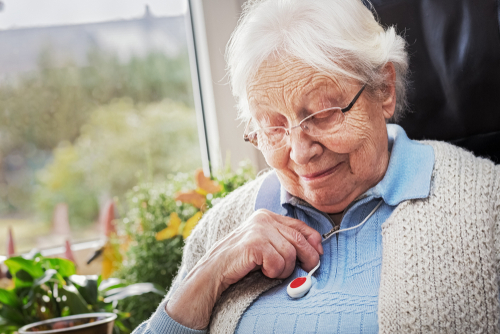
A personal alarm for the elderly is a wearable or portable device that lets older adults quickly call for help in an emergency. This form of telecare is also known as a medical alert system or panic alarm.
It is a small device which is either worn as a pendant or wristband or is kept nearby and it allows an older person to call for help instantly by pressing a button.
It is used for emergency situations, such as falls at home, accidents, dangers at home and rogue traders.
Personal alarms help an individual live safely and independently at home.
How do personal alarms work?
Most personal alarm systems follow a simple process:
- The user presses the alarm button.
- The device contacts a monitoring centre.
- A trained operator speaks to the user through the alarm unit.
- Help is arranged – a family member, carer, or emergency service.
Most personal alarms connect the user to a 24/7 monitoring centre, work inside the home (and sometimes outdoors), allow help to be summoned after a fall, illness, or emergency.
Can carers respond to personal alarms?
Yes. Alerts can be sent to carers, family members, or emergency services depending on the setup.
Do I need a personal alarm?
This telecare is ideal for people who live independently but want fast access to help in case of a fall, illness, or emergency.
Personal alarms are ideal if you live alone and have limited mobility or balance issues, are elderly or frail, have long-term health conditions, are recently discharged from hospital or are arranging care for a relative.
Is a personal alarm a good idea for the elderly?
Yes. Personal alarms provide fast access to help, reduce anxiety and support independent living at home.
Telecare: Types of personal alarms
Basic personal alarm
Sounds a very loud alarm when button is pressed to alert people in hearing distance.
Pendant alarm
Pendant alarms, when pressed connects you to 24/7 emergency response service. They will decide if you need emergency services or if they need to call one of your contacts.
There may be a setup fee and ongoing monthly or annual subscription to pay.
GPS tracking alarm
GPS tracking alarms can be used anywhere and can pinpoint your location if something happens when you’re away from home. There is also a panic button. There is a set up fee and monthly/annual subscription.
Fall detector
A fall alarm works automatically as soon as a fall is detected to get you the help you need.
It has a motion sensor to detect a fall and sends an alert to an emergency response centre or a loved one.
Lifeline alarm
Local authorities operate community alarm systems, also referred to as a lifeline alarm. You will receive a base unit and pendant.
How do I choose the right personal alarm?
When selecting a personal alarm, there are several things to consider.
Here are some questions to think about before buying an alarm.
- Is the personal alarm monitored 24/7?
- Does it work outside the home?
- Is it easy to use?
- How easy is it to cancel the alarm (if triggered accidentally)?
- Is it waterproof (e.g. for use in bathroom etc)?
- Is it QSF Certified (audited against quality standards devised by the Telecare Services Association (TSA)?
- What is the distance range of the product?
- Is it compatible with existing care arrangements?
- Is there an ongoing subscription fee?
- How many emergency contacts can you have?
- Is your personal alarm appropriate for the UK’s digital switchover (due for completion in 2027). An analogue device doesn’t use a wi-fi or Sim connection. Devices described as ‘analogue phone line’ or ‘PSTN’, won’t work after the digital switchover. To see if a device is compatible with the digital switchover, the device’s product description may say IP, VoIP-compatible, digital-ready or cloud-based.
- Does the device include ongoing support?
- Does the personal alarm need software updates?
How much is a personal alarm?
The cost of a personal alarm really depends on the type of personal alarm you get.
Here are some average costs of personal alarms.
- Basic personal alarm: £5-£20.
- Pendant alarm: £30-50 initial set up. Monthly subscription of £15-20 per month.
- GPS tracking alarm: Set-up fee £30-£50. Monthly cost £20-£30.
- Fall detector: Initial setup fee (£30-50). Monthly cost £20-27.
Can I get free personal alarms for the elderly?
- Some councils provide personal alarm equipment at low cost or free, depending on need and finances, but it’s not guaranteed nationwide.
- You can check with your council to find out if they supply a Lifeline alarm service and if you are eligible for the free service.
- If you have care needs due to age, disability, or health, you might be able to get a personal alarm at a reduced cost or receive funding towards it through your council. You can contact your local council for a care needs assessment, to help determine what support and care equipment you could get.
Why are personal alarms needed for older adults?
1. Fast help in emergencies
Falls are one of the leading causes of injury in older adults. A personal alarm ensures help can be called immediately, even if you cannot reach a phone.
2. Peace of mind
Knowing that you can get help at any time offers reassurance, especially for families who don’t live nearby.
3. Support independent living
Personal alarms help elderly people stay in their own homes longer, delaying or avoiding the need for residential care.
4. Works alongside home care
When combined with professional support from home care providers, personal alarms form part of a wider safety and care plan.
Personal Alarms vs Home Care: What’s the difference?
A personal alarm is not a replacement for care but these telecare devices can be used alongside home care services.
| Personal Alarms | Home Care |
| Emergency support | Daily living support |
| Works 24/7 | Scheduled visits or live in care |
| Low monthly cost | Tailored care plans |
| Immediate response | Ongoing assistance |
Many families use both – arranging personal care services through homecare.co.uk while also installing a personal alarm for added protection.
How can home care help keep you safe and independent?
A personal alarm for the elderly can make a life-changing difference.
While this telecare can improve safety, professional home care staff can provide:
- Help with washing, dressing and meals.
- Medication reminders.
- Specialist dementia or mobility support.
- Help with household tasks such as food shopping.
- Companionship.
- Assistance attending medical appointments, social activities, hobbies and visits to see family.
By combining personal alarms with professional support from home care providers, you can have a care solution that prioritises safety, dignity, confidence and independence at home.
If you’re exploring care options for yourself or a loved one, you can compare home care services and understand costs on homecare.co.uk.
FAQs
Can carers respond to personal alarms?
Yes. Alerts can be sent to carers, family members, or emergency services depending on the setup.
Do I need a personal alarm?
Personal alarms are ideal for people who live independently but want fast access to help in case of a fall, illness, or emergency. Personal alarms are ideal for people with limited mobility or balance issues, elderly people living alone, individuals with long-term health conditions, people recently discharged from hospital and families arranging care for a relative.
Can I get free personal alarms for the elderly?
You cannot get a personal alarm for free. If you have care needs due to age, disability, or health, you may be able to get a personal alarm at a reduced cost or receive funding towards it through your local council. You can contact your local council to ask for a care needs assessment.

Find home care near you
Search for home care near you, compare costs, and read reviews from families to help you choose.

Related Articles


Expert advice straight to your inbox